Research
Six lines of work, held together by one question. How do you build models that stay reliable when the data, the threats or the domain change after deployment? Some papers belong to two lines, so the counts below add up to more than the total.
- refereed papers
- 76
- co-authors
- 128
-
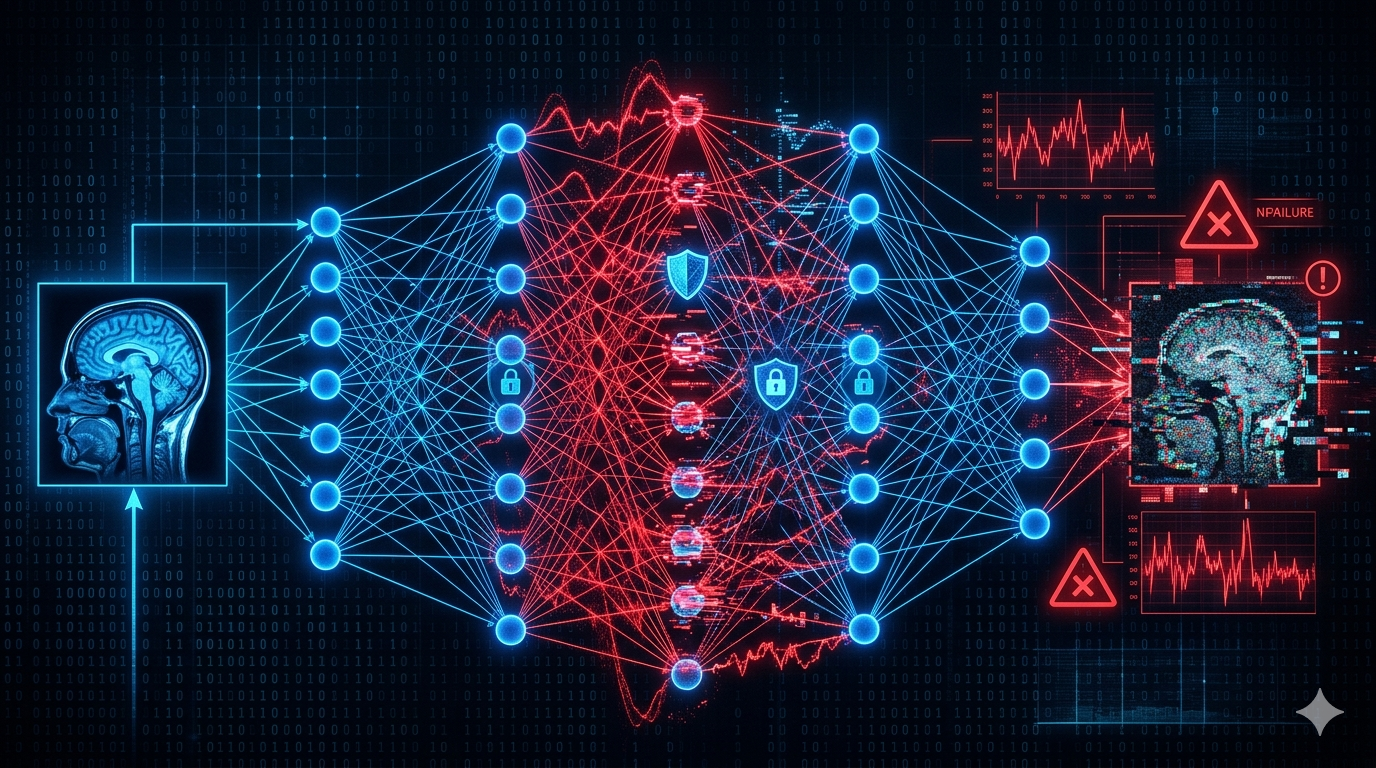
Adversarial Artificial Intelligence
Developing robust AI systems that withstand adversarial attacks — across network security, mobile malware, healthcare AI, and social network manipulation.
Robustness across security, health, and social systems
29 papers, 2018 to 2026
-

Encrypted Traffic Classification
AI-powered classification of encrypted network traffic — enabling security monitoring and QoS management without compromising encryption or user privacy.
Retrieval-based adaptation and post-quantum traffic classification
20 papers, 2020 to 2027
-

Medical Data Science
Machine learning for critical care — predicting ICU feeding complications, phenotyping rare respiratory diseases, and enabling privacy-preserving medical data collaboration.
Clinical prediction and privacy-preserving collaboration
17 papers, 2015 to 2026
-

Incentive Design
Mechanism design and game theory for e-commerce platforms, team formation, and kidney exchange — aligning individual incentives with collective outcomes.
Mechanisms for platforms, teams, and kidney exchange
21 papers, 2013 to 2022
-

Quantifying Constructivist Learning in Studio-Based Education
Data science methods that quantify learning in design studio education — measuring cognitive breakthroughs, engagement, and teaching effectiveness during live critiques.
Live-critique learning signals quantified
7 papers, 2021 to 2026
-

E-commerce and Multimodal AI
Multimodal AI that fuses computer vision and NLP to measure item similarity the way humans do, and studies of how people shop online across devices, for smarter recommendations in tourism, e-commerce, and real estate.
Vision + language + time for product similarity
7 papers, 2020 to 2026


Code and data
Most of our tools, datasets and baselines are open source, under the ArielCyber organization and Chen's GitHub.